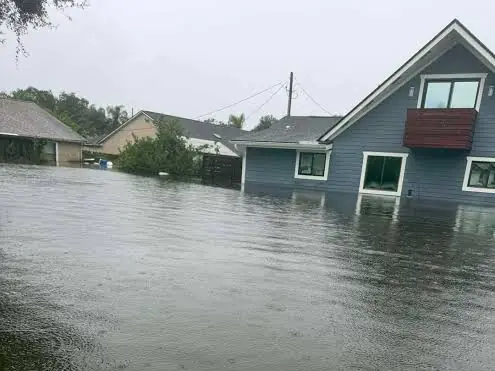
After the water goes down
Heavy rain fell across the Space Coast from November 1 to 3, 2026. On the morning of November 2, the National Weather Service (NWS) in Melbourne issued a Flash Flood Emergency for West Melbourne and Palm Bay (NWS Melbourne, Nov 2, 2026). Preliminary NWS rainfall reports through noon on November 3 show more than 24 inches near Grant-Valkaria and Malabar and 22 inches just south of Palm Bay (NWS Melbourne Public Information Statement, Nov 3, 2026). On November 3, Brevard County Emergency Management asked residents whose homes were damaged or flooded to report it through the county's online damage form. The county says the form "is not an application for assistance" (Brevard County Emergency Management; damage report form).
If water got into your home or business, here's how to stay safe, limit mold, keep good records, and get the permits you'll need to rebuild.
1. Safety first
- Stay out of floodwater and off flooded roads. Brevard County says that as floodwaters recede, people should stay off the roads and out of the water (Brevard County Emergency Management).
- Don't go back into a damaged building until it's safe. The CDC says not to reenter a damaged home until a building inspector has examined it for safety (CDC).
- Electrical hazards: If you can turn off the main power from a dry location, do it. If you'd have to step into standing water to reach it, call an electrician. Have an electrician check the electrical system before power goes back on. Never turn power on or off while standing in water (CDC).
- Gas: If you smell gas, turn off the main valve if you can, open windows, leave right away, and call the gas company or fire department (CDC).
- Floodwater is contaminated: Brevard County warns that floodwater can contain bacteria, chemicals, debris, sharp objects and downed power lines. Keep children and pets out of it (Brevard County Emergency Management). The CDC notes a flooded home may also be contaminated with sewage (CDC).
- Generators go outside, at least 20 feet from doors, windows and vents (CDC).
- Structural warning signs: sagging ceilings, cracked or shifted walls, soft floors, or doors that suddenly stick. If you see these, stay out and have the building evaluated.
2. Document the damage before you clean
FEMA's FloodSmart program recommends documenting everything before you start cleaning (FEMA FloodSmart):
- Photos and video of every room, with wide shots and close-ups
- Water lines on walls, furniture and appliances
- Structural damage to floors, ceilings and foundations
- Serial numbers on damaged appliances and electronics
- Small samples of damaged carpet, drywall or insulation
- Receipts for repairs and replacement items
The CDC also suggests photographing items before you throw them out (CDC). Talk to your insurance company early about what your policy covers and what they need from you.
Report your damage to the county. Brevard County Emergency Management asks residents whose homes were damaged or flooded to fill out its online damage report with a property address, name and photos. The county says the form "is not an application for assistance" (Brevard County Emergency Management; form).
3. Dry it out fast
The EPA says it's important to "dry water-damaged areas and items within 24-48 hours to prevent mold growth" (EPA). The CDC says to remove anything that got wet with floodwater and can't be fully cleaned and dried within 24 to 48 hours (CDC).
- When it's safe, open doors and windows, and use fans and dehumidifiers. The CDC says to place fans at a window or door blowing outward so they don't spread mold (CDC).
- The CDC lists carpet and pad, upholstery, drywall, ceiling tiles, insulation and some wood products among porous items that usually have to go if they've been wet for more than 48 hours and can't be cleaned and dried (CDC MMWR).
- Wet drywall is often cut out above the water line so the wall cavity and insulation can dry and be checked.
- Don't close up walls until a moisture meter shows framing and subfloor are dry.
- Don't run a flooded HVAC system until it's been checked and cleaned by a professional (CDC).
4. Mold: what the EPA and CDC say
- Small areas: The EPA says that if the moldy area is less than about 10 square feet, you can usually handle it yourself (EPA).
- Protect yourself: Wear at least a NIOSH-approved N95 respirator. For bigger jobs like removing moldy drywall, the CDC recommends a half-face or full-face respirator. Wear non-latex gloves (vinyl, nitrile or rubber) and goggles without vent holes (CDC).
- Remove it, don't cover it: Painting or caulking over mold won't stop it from growing (CDC).
- Never mix bleach with ammonia (CDC MMWR).
- People with asthma, allergies, lung conditions or weakened immune systems should avoid mold cleanup or ask their doctor first (CDC MMWR).
OBC Construction, LLC performs mold remediation as part of flood repair work, within the scope of its Florida certified general contractor license (CGC1520090). That means the mold removal, drying and rebuild can all be handled by one licensed contractor.
5. Permits for flood repairs in Brevard County
Flood repairs usually need permits, and properties in flood zones have an extra step.
For unincorporated Brevard County, the county's post-storm guidance says properties in FEMA-mapped flood zones that were damaged by wind, water, fallen trees or other causes must be inspected to see whether the damage counts as "substantial damage" before building permits can be issued for repair or reconstruction (Brevard County Flood Zone Post Storm Inspection and Permitting).
According to that county document:
- Substantial damage means the cost of restoring the building to its pre-damage condition would equal or exceed 50% of the building's market value before the damage.
- A substantially damaged building has to be brought into compliance with the floodplain requirements in the Florida Building Code, which can include elevating it.
- Owners submit a detailed, complete repair estimate prepared and signed by a licensed general contractor.
- The contact for these inspections is Brevard County Planning & Development, Building Permits, 2725 Judge Fran Jamieson Way, Viera, (321) 633-2072.
The county's Floodplain Administration page says any development in the floodplain needs a building permit under Chapter 22 of the county code (Brevard County Floodplain Administration). Permit applications and inspection requests are on the county's Building Permits page.
If your property is inside a city such as Palm Bay, Melbourne, West Melbourne or Titusville, your city's building department handles permits and may have its own process.
Hire licensed help. FEMA recommends getting multiple written estimates, checking licensing, and talking to your insurer before you sign a contract or pay. It warns that demanding full payment before work starts can be a sign of a scam (FEMA FloodSmart). You can look up any Florida contractor's license at myfloridalicense.com.
Ready to plan your flood repair?
OBC Construction is a Space Coast general contractor that handles full flood construction and rebuilds, including mold remediation within the scope of our general contractor license. We can walk your property, put together a written repair scope, help you work through permits with your building department, and rebuild.
Call (321) 878-8558 or use our Get Help form.
Sources
- National Weather Service Melbourne, Flash Flood Warning / Flash Flood Emergency, Nov 2, 2026: https://api.weather.gov/products/505e878d-7694-4951-a867-58a83535b180
- National Weather Service Melbourne, Public Information Statement (precipitation reports), Nov 3, 2026: https://api.weather.gov/products/dc27f1fa-0904-4143-bffd-f50992b082a5
- Brevard County Emergency Management: https://www.brevardfl.gov/eahome
- Brevard County Damage Self Report form: https://crisistrack.juvare.com/public/brevardFL/request.html
- Brevard County, Flood Zone Post Storm Inspection and Permitting Requirement (PDF): https://www.brevardfl.gov/docs/default-source/public-works/brevard-county-flood-zone-post-storm-inspection-and-permitting-requirement.pdf?sfvrsn=58a2efe_2
- Brevard County Public Works, Floodplain Administration: https://www.brevardfl.gov/PublicWorks/EngineeringProgram/FloodZoneInformation
- Brevard County Planning & Development, Building Permits: https://www.brevardfl.gov/PlanningAndDevelopment/BuildingPermits
- FEMA FloodSmart, How to Document Flood Damage: https://www.floodsmart.gov/recover/document-damage
- EPA, A Brief Guide to Mold, Moisture and Your Home: https://www.epa.gov/mold/brief-guide-mold-moisture-and-your-home
- EPA, Mold Cleanup in Your Home: https://www.epa.gov/mold/mold-cleanup-your-home
- CDC, Safety Guidelines: Reentering Your Flooded Home: https://www.cdc.gov/floods/safety/reentering-your-flooded-home-safety.html
- CDC, Mold Clean Up Guidelines and Recommendations: https://www.cdc.gov/mold-health/about/clean-up.html
- CDC, 8 Tips to Clean up Mold: https://www.cdc.gov/natural-disasters/psa-toolkit/8-tips-to-cleanup-mold.html
- CDC MMWR, Mold Prevention Strategies After Hurricanes and Major Floods: https://www.cdc.gov/mmwr/PDF/rr/rr5508.pdf
- Florida DBPR license search: https://www.myfloridalicense.com/wl11.asp?file=search.asp
OBC Construction, LLC · Space Coast, Brevard County, FL · State Certified General Contractor, License No. CGC1520090 (verify at myfloridalicense.com)
Flood damage repair & rebuild (OBC Construction)
OBC Construction, LLC · Fla. Lic. CGC1520090
Call (321) 878-8558 or use our Get Help form.
Related articles
- Flooded home? 9 steps to protect it until help arrives
- What to Do If Your AC Flooded: A Space Coast Safety Guide
- What Is an Engineered Damage Report? How It Documents Flood Damage for Space Coast Property Owners
- Flood Repairs and Permits on the Space Coast: What Brevard Property Owners Should Know
- Mold After Flooding on the Space Coast: Warning Signs, Why Speed Matters, and Remediation by a Licensed General Contractor