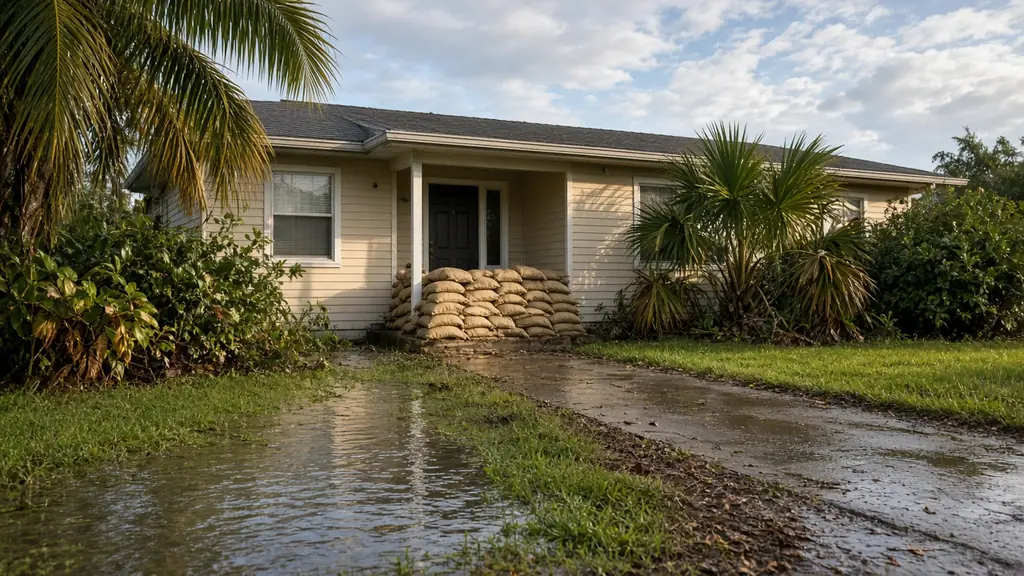
Put safety first
Don’t walk into standing water if the power may still be on. Turn off breakers at the main panel only if you can reach it from a dry spot and it’s safe. If you’d have to stand in water to reach the panel, stay out and call FPL or a licensed electrician. If a broken pipe is part of the problem, shut off the main water valve. Watch for snakes and other wildlife, wear rubber boots and gloves, and keep kids and pets out of the wet areas. If you smell gas, leave and call for help from outside.
Photograph and video everything first
Before you move, clean or remove anything, take photos and video of every room, the water line on the walls, damaged belongings, and the outside of your home. This record helps when you talk with your insurance company.
Get the water out
Use a wet vac, mop and towels to remove standing water. Pull up wet rugs, carpet and carpet pad so the floor underneath can dry.
Move belongings up or out
Move furniture, electronics, papers and keepsakes to a dry room or off the floor. Put aluminum foil or wood blocks under furniture legs so they don’t wick up water or stain the floor.
Remove wet baseboards and the bottom of wet drywall
Only after your photos are done. Pull off wet baseboards. Then, with a utility knife and a level or chalk line, cut a straight line 4 to 6 inches above the water line; at minimum, remove the bottom 4 to 6 inches of wet drywall. Pull out wet insulation behind it. This lets the wall cavity drain, breathe and dry. Keep a sample piece of the removed drywall and your photos for the adjuster.
Dry the house out
Open windows when the outside air is drier than inside, and run fans and dehumidifiers. Don’t run your AC or furnace if the outdoor unit, indoor unit or ductwork got wet. Leave it off at the breaker and have it checked first.
Throw out what can’t be saved
Discard porous items that soaked in floodwater, such as mattresses, pillows, upholstered cushions and stuffed toys, and any food that touched the water. Photograph items before they go out to the curb. When in doubt, throw it out.
Never run a generator indoors
Generators, pressure washers and other gas engines make carbon monoxide. Keep them outside, at least 20 feet from doors, windows and vents, and never in a garage or porch.
Keep every receipt, then call us
Save receipts for fans, dehumidifiers, supplies, hotel stays and meals. When you’re ready, call (321) 878-8558 or use the Get Help form. A local, licensed team will follow up with clear next steps.
How our three companies can help
Cooling 321 · Flooded AC
If your AC sat in water, leave it off. We inspect, repair or replace flood-damaged systems.
OBC Air & Heat, LLC · Fla. Lic. CAC1825377
OBC Construction · Dry-out & rebuild
Drying out, tear-out, mold remediation and rebuild, start to finish.
OBC Construction, LLC · Fla. Lic. CGC1520090
OBC Engineering · Damage documentation
An engineered damage report signed and sealed by a Florida-licensed Professional Engineer. We document damage, we do not negotiate or adjust claims.
Fla. CA No. 39732
Official flood resources
- FEMA Ready.gov: Floods
- FloodSmart.gov (National Flood Insurance Program)
- CDC: Reentering Your Flooded Home
- FPL: Power outages
Related articles
- What to Do If Your AC Flooded: A Space Coast Safety Guide
- Flood Damage Repair on the Space Coast: Drying Out, Mold, Documentation and Permits
- What Is an Engineered Damage Report? How It Documents Flood Damage for Space Coast Property Owners
- Flood Repairs and Permits on the Space Coast: What Brevard Property Owners Should Know
- Mold After Flooding on the Space Coast: Warning Signs, Why Speed Matters, and Remediation by a Licensed General Contractor
Every home is different. This checklist is general guidance, not a promise of insurance coverage; check your policy with your insurer.