After the flooding, watch for mold
Heavy rain fell across the Space Coast from November 1 to 3, 2026. On the morning of November 2, the National Weather Service (NWS) in Melbourne issued a Flash Flood Emergency for West Melbourne and Palm Bay (NWS Melbourne, Nov 2, 2026). Preliminary NWS rainfall reports through noon on November 3 show more than 24 inches near Grant-Valkaria and Malabar and 22 inches just south of Palm Bay (NWS Melbourne Public Information Statement, Nov 3, 2026). On November 3, Brevard County Emergency Management asked residents whose homes were damaged or flooded to report it through the county's online damage form. The county says the form "is not an application for assistance" (Brevard County Emergency Management; damage report form).
Once the water goes down, mold is often the next problem. Here's what to watch for, why speed matters, and what a proper cleanup and rebuild look like.
Signs of mold to watch for
- A musty smell. The EPA says a "moldy odor suggests that mold is growing in the building and should be investigated," even when you can't see it (EPA).
- Visible growth. The CDC says mold "can look like spots of many different colors" (CDC). Check the bottoms of walls, baseboards, cabinet bases, closets and behind furniture.
- Stains and water damage. Discoloration, peeling paint, bubbling drywall, or warped floors and trim mean moisture may still be there. The EPA notes mold can also leave stains and cosmetic damage that may not clean up completely (EPA).
- Health symptoms. According to the CDC, mold can cause "a stuffy nose, sore throat, coughing or wheezing, burning eyes, or skin rash" in some people. People with asthma or mold allergies may react more strongly, and people with weakened immune systems or chronic lung disease can get lung infections from mold (CDC). If you have symptoms, talk to a doctor.
The CDC says that if your home was flooded and closed up for several days, you should assume it has mold (CDC). It also says that whatever type of mold is present, it needs to be removed (CDC).
Why speed matters: the 24–48 hour window
The EPA says it's important to "dry water-damaged areas and items within 24-48 hours to prevent mold growth" (EPA). The CDC gives the same timeframe for drying out after a flood (CDC), and FEMA's FloodSmart program notes mold can start forming within 24 to 48 hours of flooding (FEMA FloodSmart).
After rain like this, many homes and businesses can't be dried that quickly. That's why so many wet materials end up having to come out.
Safety first
- Electrical hazards: If you can turn off the main power from a dry location, do it. If you'd have to step into standing water, call an electrician. Never turn power on or off while standing in water, and have an electrician check the system before power goes back on (CDC).
- Floodwater contamination: Brevard County warns floodwater can contain bacteria, chemicals, debris, sharp objects and downed power lines (Brevard County Emergency Management). The CDC notes flooded homes may also be contaminated with sewage (CDC).
- Mold PPE: The CDC recommends at least a NIOSH-approved N95 respirator, and a half-face or full-face respirator for bigger jobs like removing moldy drywall. Wear non-latex gloves (vinyl, nitrile or rubber) and goggles without vent holes (CDC).
- Never mix bleach with ammonia or other cleaners. It makes a poisonous gas (CDC).
- Don't run a flooded HVAC system until a professional has checked and cleaned it, because it can spread mold through the house (CDC).
- Know when to step back: The EPA says you can usually handle a moldy area under about 10 square feet yourself (EPA). People with asthma, allergies, lung conditions or weakened immune systems should avoid mold cleanup or ask their doctor first (CDC MMWR).
What mold remediation involves
The CDC lays out general steps for mold cleanup after a flood (CDC MMWR). A typical job follows a sequence like this:
- Stop the water and find the moisture. If the moisture problem isn't fixed, mold is likely to come back (EPA).
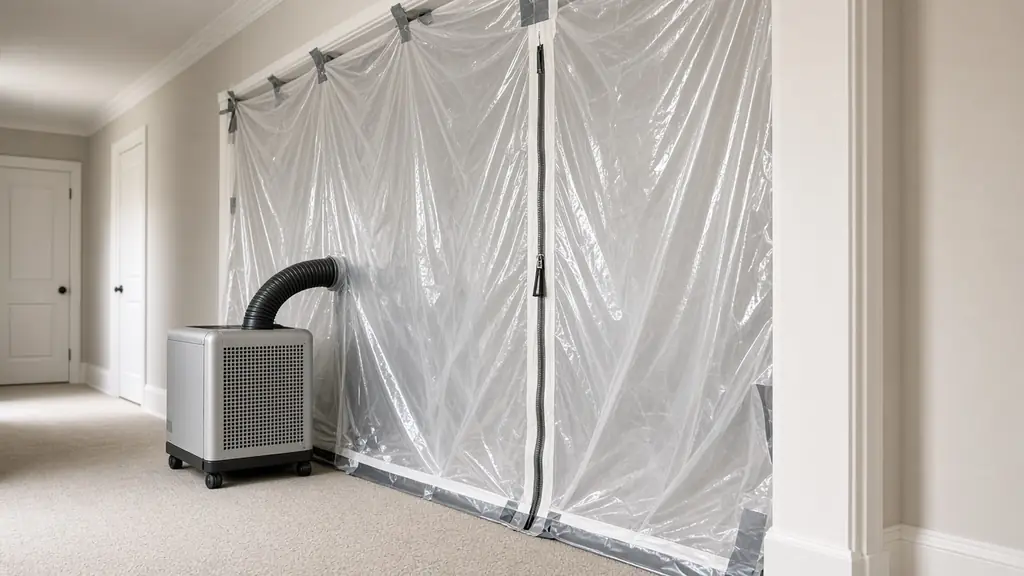
- Set up containment. The CDC lists establishing containment and protection for workers and occupants, where needed, so spores and dust don't spread to clean areas.
- Remove porous materials. The CDC says porous items that have been wet for more than 48 hours and can't be cleaned and dried should be removed. That includes carpet and pad, drywall, ceiling tiles, insulation and some wood products.
- Clean hard surfaces. Scrub with detergent and water, then dry completely (EPA).
- Dry the structure. Use fans and dehumidifiers once the electrical system is safe, and check framing and subfloor with a moisture meter before closing anything up.
- Check the work. The EPA says cleanup isn't finished until the moisture problem is fixed, visible mold and moldy odors are gone, and people can use the space without health complaints (EPA).
- Rebuild. New insulation, drywall, finishes and flooring go in, with permits where required.
Don't paint or caulk over mold. It won't fix the problem (CDC).
Document it for insurance
Photograph mold and water damage before anything is removed. FEMA's FloodSmart program recommends photos and video, water lines, samples of damaged materials and repair receipts (FEMA FloodSmart). FEMA also notes that mold damage isn't covered under standard NFIP flood insurance policies, with some exceptions when officials restrict access or floodwater makes it unsafe to clean up. Ask your insurance company what your policy covers. We can't tell you what will be covered, and we don't file or handle claims.
Mold remediation and rebuilding by a licensed general contractor
OBC Construction, LLC is a Space Coast general contractor. We perform mold remediation as part of flood repair work, within the scope of our Florida certified general contractor license (CGC1520090). Removal, drying and rebuilding can all be handled by one licensed contractor, with permits pulled where required.
If your home or business in Palm Bay, Melbourne, West Melbourne or elsewhere on the Space Coast took on water, give us a call to walk the property and put together a written scope.
Call (321) 878-8558 or use our Get Help form.
Sources
- National Weather Service Melbourne, Flash Flood Warning / Flash Flood Emergency, Nov 2, 2026: https://api.weather.gov/products/505e878d-7694-4951-a867-58a83535b180
- National Weather Service Melbourne, Public Information Statement (precipitation reports), Nov 3, 2026: https://api.weather.gov/products/dc27f1fa-0904-4143-bffd-f50992b082a5
- Brevard County Emergency Management: https://www.brevardfl.gov/eahome
- Brevard County Damage Self Report form: https://crisistrack.juvare.com/public/brevardFL/request.html
- EPA, What Does Mold Smell Like?: https://www.epa.gov/mold/what-does-mold-smell
- EPA, A Brief Guide to Mold, Moisture and Your Home: https://www.epa.gov/mold/brief-guide-mold-moisture-and-your-home
- EPA, Mold Cleanup in Your Home: https://www.epa.gov/mold/mold-cleanup-your-home
- CDC, Mold (About): https://www.cdc.gov/mold-health/about/index.html
- CDC, Mold Clean Up Guidelines and Recommendations: https://www.cdc.gov/mold-health/about/clean-up.html
- CDC, 8 Tips to Clean up Mold: https://www.cdc.gov/natural-disasters/psa-toolkit/8-tips-to-cleanup-mold.html
- CDC, Safety Guidelines: Reentering Your Flooded Home: https://www.cdc.gov/floods/safety/reentering-your-flooded-home-safety.html
- CDC MMWR, Mold Prevention Strategies After Hurricanes and Major Floods: https://www.cdc.gov/mmwr/PDF/rr/rr5508.pdf
- FEMA FloodSmart, How to Document Flood Damage: https://www.floodsmart.gov/recover/document-damage
OBC Construction, LLC · Space Coast, Brevard County, FL · State Certified General Contractor, License No. CGC1520090 (verify at myfloridalicense.com)
Mold remediation (OBC Construction)
OBC Construction, LLC · Fla. Lic. CGC1520090
Call (321) 878-8558 or use our Get Help form.
Related articles
- Flooded home? 9 steps to protect it until help arrives
- What to Do If Your AC Flooded: A Space Coast Safety Guide
- Flood Damage Repair on the Space Coast: Drying Out, Mold, Documentation and Permits
- What Is an Engineered Damage Report? How It Documents Flood Damage for Space Coast Property Owners
- Flood Repairs and Permits on the Space Coast: What Brevard Property Owners Should Know